Damage from too much pressure
Pressure washing is safe when the pressure matches the surface. Most damage comes from a narrow tip held too close.
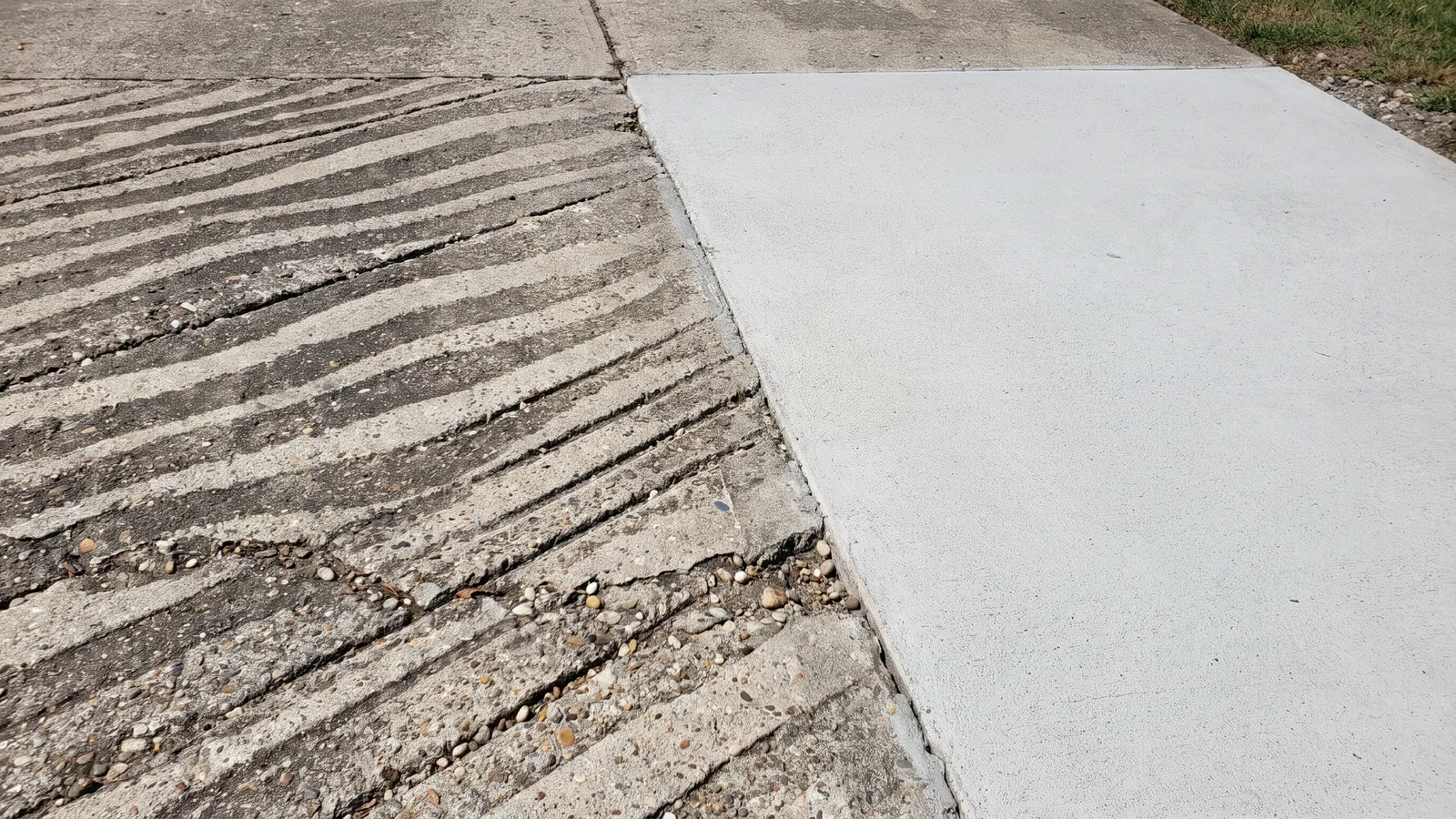
What goes wrong, surface by surface
Concrete: stripes and etching
Concrete can take a lot, but a zero-degree or 15-degree tip held a few inches away cuts into the cream on top and leaves wavy lines that are permanent. Using a surface cleaner prevents most of it. So does keeping the wand moving.
Wood decks and fences: furring and gouges
Pine and cedar are soft. Too much pressure lifts the fibers into a fuzzy, splintery surface and carves grooves that catch dirt and show through stain. The fix is sanding, which costs more than the wash.
Siding: water where it shouldn't be
Spray aimed upward under vinyl laps pushes water into the wall. It can also tear siding off its nailing strip, chip paint off wood siding, and gouge stucco.
Windows and seals
High pressure on double-pane windows can break the seal, which shows up later as fog between the panes. Screens tear. Caulk gets blown out.
Roofs
Shingle granules wash off, and many manufacturers say pressure washing voids the warranty.
Quick rules if you're doing it yourself
- Start with the widest tip, usually 40 degrees, and move in only as needed.
- Keep at least a foot or two of distance on anything that isn't concrete.
- Keep moving; never hold in one spot.
- Spray down and across, never up under laps or flashing.
- Use a surface cleaner on flatwork.
- Leave roofs and second-story siding to someone with a soft wash setup and ladders.
Want it done for you? See driveway washing or house washing.
Common follow-ups
Can zebra stripes on concrete be fixed?
Re-washing the whole slab evenly with a surface cleaner can blend light stripes. Deeply etched lines are permanent.
My deck feels fuzzy after washing. What now?
Let it dry completely, then lightly sand the raised fibers before staining.
Can pressure washing crack concrete?
It rarely causes cracks, but it can widen existing ones and wash out joint material.